
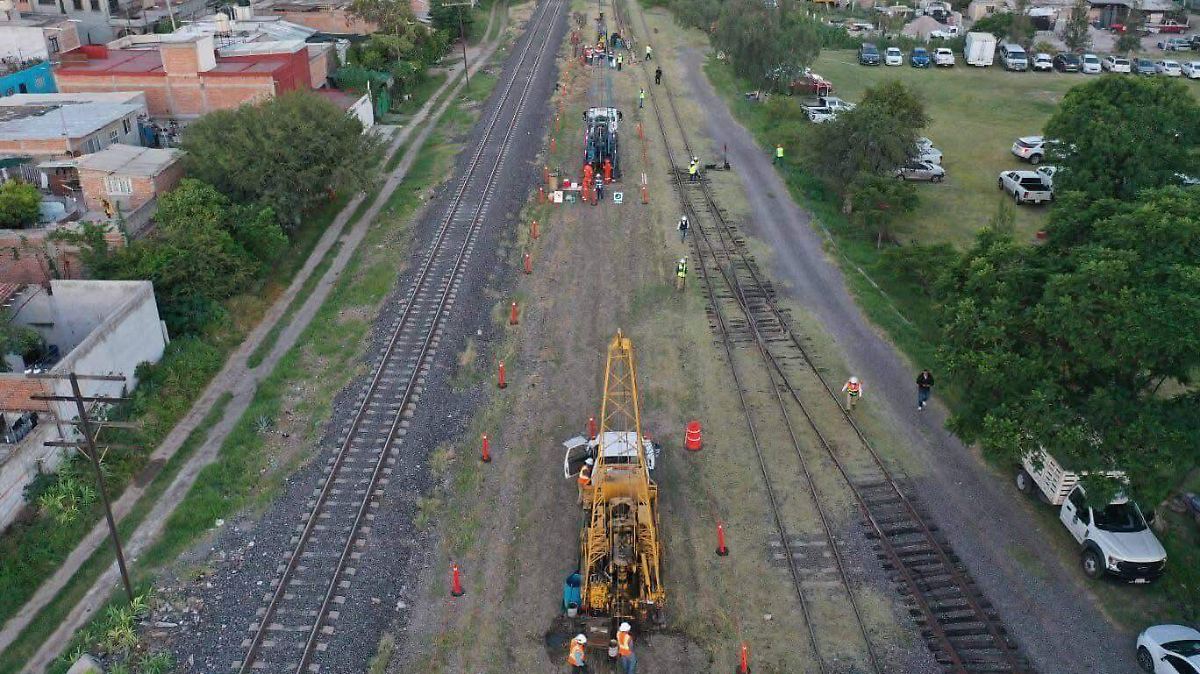
The Querétaro–Irapuato passenger train is a railway project under construction between the Mexican states of Querétaro and Guanajuato. Part of Mexico’s passenger rail expansion, it aims to make travel easier between cities and economic centers in the Bajío region.
As of October 31, 2026, construction had reached 24.71% physical completion, according to the Government of Guanajuato. Passenger service has not begun.
Current construction status
| Indicator | Officially reported status |
|---|---|
| Status | Under construction |
| Physical progress | 24.71% as of October 31, 2026 |
| Length | 108.2 km (Guanajuato) / 102 km (federal government) |
| Population expected to benefit | Approximately 2 million, an official projection |
| Viaducts | 5 of 10 under construction as of October, per Presidencia |
| Opening date | No definitive date confirmed in the reviewed sources |
| Ticket prices | Not announced in the official sources reviewed |
Data note: state and federal sources publish different route lengths. Both figures are shown with attribution rather than presented as equivalent.
Route and planned stations
The corridor will link Querétaro and Irapuato. The Government of Guanajuato identifies five planned stations within the state:
| Planned station | Location |
|---|---|
| Apaseo el Grande | Apaseo el Grande |
| Celaya | Celaya |
| Cortazar–Villagrán | Cortazar / Villagrán |
| Salamanca | Salamanca |
| Irapuato | Irapuato |
The line is part of a broader passenger rail network with connections toward Querétaro and Mexico City. Final station access and local transport connections will shape its usefulness for everyday trips.
Why the project matters for the Bajío
The corridor passes through one of Mexico’s major manufacturing regions. According to INEGI’s 2024 Economic Census, manufacturing accounted for 65.1% of Guanajuato’s gross census value added in 2023 within the private sector and state-owned enterprises.
Intercity rail could support workforce mobility and make travel between cities, schools and employment centers easier. These benefits remain potential outcomes, dependent on fares, frequency, travel times and access to stations.
What happens next?
According to the federal update published October 31, five viaducts were under construction. Two more were scheduled to start in the first week of November, and the remaining three before the end of 2026. These are announced milestones, not independently confirmed subsequent progress.
Authorities have not yet confirmed final operating arrangements, including service frequency, opening date and ticket prices.
Platonica Perspective
For manufacturers, workers and residents across the Bajío, this project’s value lies in better connecting cities with existing economic ties. Construction progress can be measured today. Its contribution to regional development can only be assessed once passenger service begins and the railway’s connections to local mobility are known.
Frequently asked questions
Is the Querétaro–Irapuato train operating?
No. As of October 31, 2026, the project was under construction, with 24.71% physical completion reported.
When will passenger service begin?
No definitive opening date has been confirmed in the reviewed official reports.
How much will train tickets cost?
Official fares were not available in the sources reviewed.
Sources and documentation
- Government of Guanajuato. Rail project supervision report, October 31, 2026. Read the official release (Spanish).
- Office of the President of Mexico. Construction progress and planned viaducts, October 31, 2026. Read the federal release (Spanish).
- Office of the President of Mexico. Projection of 33,000 daily passengers, September 23, 2026. Read the briefing (Spanish).
- Proyectos México. Railway project profile; figures subject to revision. Project profile (Spanish).
- INEGI. 2024 Economic Census, final Guanajuato results, July 24, 2025. Official PDF (Spanish).
Information cutoff: October 31, 2026. Ridership and expected population benefits are projections, not observed operating results.
Monitoring: this article will be updated when new official reports clarify construction progress, stations, operating arrangements or fares.